




Back to Blog
In Southwest Oklahoma and across the border in Wichita Falls, we take pride in our resilience. We handle the summer heat, the unpredictable spring storms, and the dry winter winds. However, there is a hidden element in our region that is quietly working against one of your home’s most important appliances: your water heater. That element is hard water.
While our local water is safe to drink, the geology of the Red River Valley and the surrounding plains means our groundwater is packed with minerals like calcium and magnesium. To a homeowner, this might just seem like a nuisance that causes spots on glassware, but inside your water heater, it is a recipe for disaster. At Robinson Air, we see the results of this mineral-heavy water every single day.
If you live in Lawton, Duncan, or Wichita Falls, your water heater is likely fighting a losing battle against sediment. Understanding how this damage happens is the first step in extending the life of your unit and keeping your energy bills from skyrocketing.
The Science of Scale: Why Heat Makes it Worse
Hard water is essentially water that has dissolved bits of rock in it. As long as the water stays cold, these minerals remain suspended and invisible. However, everything changes the moment that water enters your heater and meets the heating elements.
The Crystallization Process
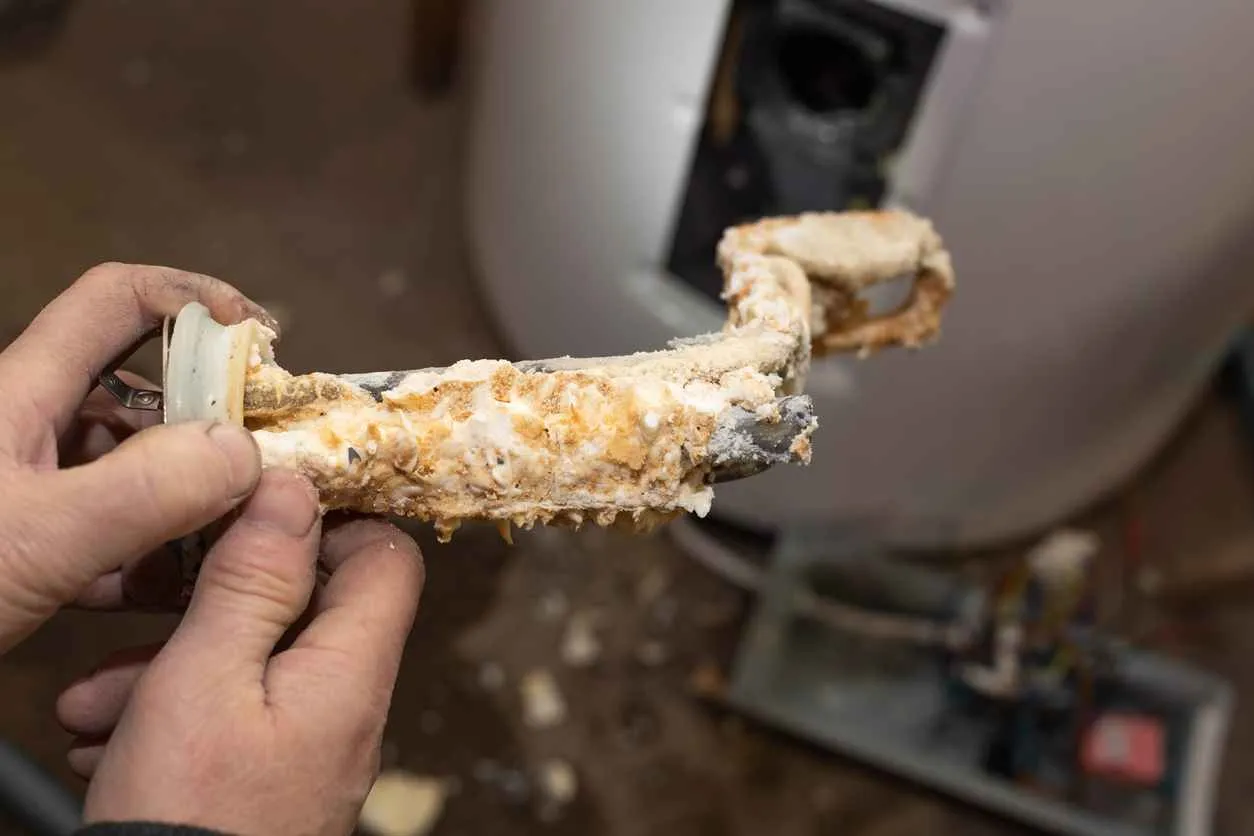
When hard water is heated, the calcium and magnesium undergo a chemical reaction. They solidify into tiny crystals that fall to the bottom of the tank. Over months and years, these crystals bond together to form a thick, chalky crust known as limescale.
The Insulating Layer
In a gas water heater, the burner is located at the very bottom of the tank. When a thick layer of limescale builds up there, it acts as a heavy insulation blanket. Instead of heating the water directly, the burner now has to heat through a layer of rock first.
- Wasted Energy: Your unit has to run longer and hotter to reach the desired temperature, which can increase your energy consumption by as much as 25 percent.
- Metal Fatigue: Because the bottom of the tank is getting much hotter than it was designed for, the steel begins to weaken, eventually leading to cracks and leaks.
Signs Your Southwest Oklahoma Home Has a Sediment Problem
Because the damage happens inside the tank, it can be hard to notice until it is too late. However, your water heater will usually try to tell you when it is struggling.
The Popping and Rumbling Sound
Have you ever heard a sound like popcorn popping or gravel rolling around inside your water heater? That is a classic sign of advanced sediment buildup. When water gets trapped underneath the layers of limescale, it boils into steam. That steam then “pops” through the sediment crust, creating the loud rumbling noises you hear in your utility closet.
Lukewarm Showers
If it feels like your hot water does not last as long as it used to, or if it never truly gets “scalding” hot, sediment is likely the culprit. The layer of scale reduces the total volume of water the tank can hold and prevents the heating elements from working at full capacity.
Cloudy or Discolored Water
If your hot water looks “milky” when it first comes out of the tap, you are likely seeing suspended mineral particles. If the water has an orange or reddish tint, it means the sediment has already begun to corrode the internal lining of your tank.
Neighborhood Focus: Wichita Falls and Lawton Water Profiles
At Robinson Air, we know that water quality can vary even between neighboring towns.
- Lawton and Southwest Oklahoma: Much of the water in our area comes from local lakes and deep wells. Because this water passes through limestone-rich soil, it is consistently classified as “hard” to “very hard.”
- Wichita Falls: While the City of Wichita Falls maintains a “Superior Water System” rating for safety and purity, the raw mineral content remains high. Homeowners in older Wichita Falls neighborhoods often see faster buildup because the aging municipal pipes can also contribute small amounts of iron and silt to the mix.
In both regions, the mineral levels are high enough that a standard tank water heater can begin to show signs of “sediment stress” in as little as two to three years if it is not properly maintained.
The “Anode Rod” Factor in Hard Water
Every tank water heater contains a sacrificial anode rod. Its job is to attract corrosive elements so they eat the rod instead of your tank. In Southwest Oklahoma, our hard water is so aggressive that it can dissolve a standard anode rod in half the time it would take in other parts of the country. Once that rod is gone, the minerals begin to eat away at the steel walls of your tank, leading to a catastrophic leak.
How to Protect Your Investment
You do not have to accept a shortened water heater lifespan as a fact of life in Oklahoma or Texas. There are three primary ways to fight back.
1. Annual Professional Flushing
The most important thing you can do is have your tank flushed at least once a year. This isn’t just a simple drain; it involves a high-pressure rinse to scour the sediment off the bottom of the tank and out of the drain valve.
2. Whole-Home Water Filtration
Robinson Air offers advanced water filtration and softening solutions. By removing the calcium and magnesium before the water even enters your heater, you eliminate the source of the scale. This can double the life of your water heater and protect your dishwasher and washing machine at the same time.
3. Upgrading to Tankless
If your current unit is over ten years old and struggling, it may be time to consider a tankless water heater. While they still require annual descaling, they do not have a tank where gallons of sediment can settle and rot. They are much more efficient and provide endless hot water on demand.
Don’t Let Hard Water Drain Your Wallet
Your water heater is one of the hardest-working appliances in your home, and in our part of the country, it is working in hostile conditions. By staying proactive with maintenance and understanding the unique challenges of Southwest Oklahoma water, you can avoid the “emergency” of a cold shower or a flooded garage.
At Robinson Air, we have over 15 years of experience helping our neighbors in Lawton and Wichita Falls keep their homes running smoothly. Whether you need a simple flush or a brand-new, high-efficiency system, we are here to help.
Contact Robinson Air today to schedule a water heater health check and make sure hard water isn’t cutting your system’s life short.
Recent News
How to Prep Your AC for Early Heat Waves in Southwest Oklahoma
Plumbing and HVAC Oversights That Cause High Energy Bills Across the Plains

Emergency Heat Failure in Winter: What to Do Immediately & How to Minimize Damage
Heat Pumps in Texas & Oklahoma: Are They A Viable Option for Your Home?
Get in Touch